Elvendor : Northan
The Northern Clans
- Overview
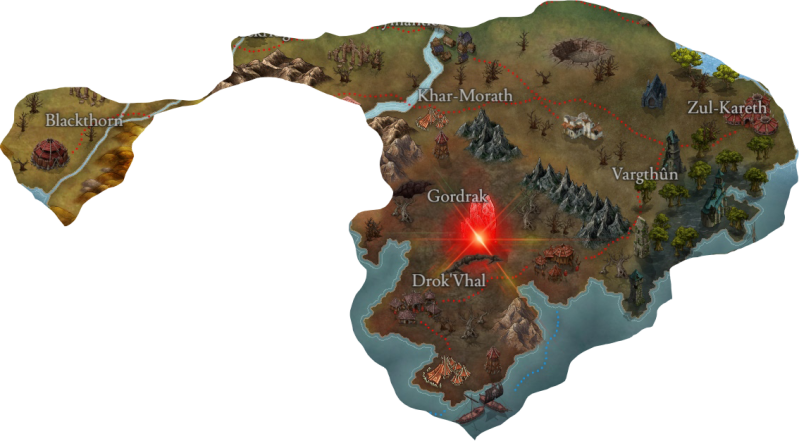
The Orcs inhabit the darkened regions of the southern expanse, a harsh and corrupted land where Death, Poison, Blood, and Mind-control crystals coexist. They are a war-driven society built around strength, dominance, and survival rather than refined politics.
Physically, Orcs are muscular and imposing. They are slightly taller than humans but shorter than elves. Their skin ranges from dark gray to lighter gray tones. Their equipment is brutal and practical—often assembled from scavenged metal, leather, bone, and battlefield remains rather than forged with elegance.
2. Society Structure
Orc society is divided into warriors, hunters, necromancers, and common villagers. They are not expansionist empires, but they frequently raid neighboring territories. Strength and dominance are respected above diplomacy.
Goblins live among Orc settlements but are not slaves. They maintain their own quarters within Orc villages and are often used as scouts, raiders, or first-wave shock troops.
3. Military Composition
- Brute Warriors – Heavy weapon fighters using axes, maces, and raw force.
- Hunter-Rangers – Scouts and trackers skilled with bows and knives.
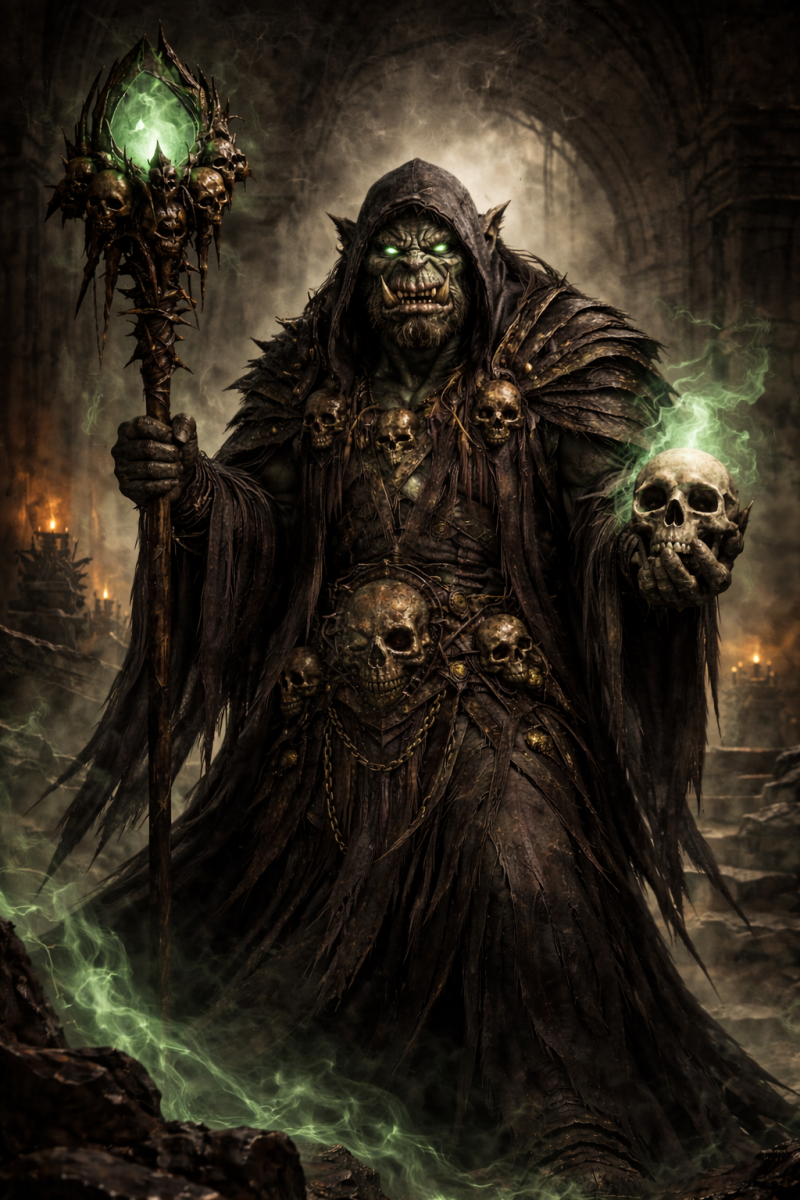
- Necromancers – Dark crystal wielders aligned with Death and Poison energies.
- Common Soldiers – Core infantry drawn from Orc villages.

4. Crystalline Influence
The Orc homeland contains strong concentrations of Death, Poison, Blood, and Mind-control crystals. These are not organized religions but form cult-like traditions. Necromancy and corruption-based magic are common among elite ranks.
5. Government & War Hierarchy
- War Chief – Supreme leader of all Orc clans.
- Bone-Seer – High Necromancer and spiritual war advisor.
- Iron-Fang – High Warlord and commander of military forces.
- Warbands – Semi-independent battle groups led by Fang Captains.
- Soldiers & Raiders – Core fighting force.
6. Cultural Traits
Orcs value endurance, aggression, and survival. Their settlements are made of crude stone, wood, bone, and ritual chambers rather than refined cities. Dark ceremonial sites and war camps define their architecture.
The Orcs of the Shattered Expanse
(Working Profile Draft)
1. Core Identity
The Orcs are not mindless raiders.
They are:
- Hardened survivalists
- Crystal-corrupted but not enslaved by religion
- Militarized by environment
- Structured through dominance and strength
They inhabit the darkened southern-brown region of the central continent — a land warped by:
- Death Crystal influence
- Poison Crystal seepage
- Mind-Control / Warlock crystal corruption
- Blood-aligned power stones
Their land shapes them. Their culture is a response to it.
2. Physical Traits
- Slightly taller than humans
- Shorter than Elves
- Muscular, dense frame
- Lighter or darker grey skin tones (regional variation possible)
- Heavy bone structure, thick brows
- Scar culture (scars = honor, not shame)
Their appearance reflects environmental exposure to volatile crystal fields.
3. Society Structure (Basic Layer)
There are four primary social categories among Orcs:
1. The War-Brutes
Frontline soldiers.
- Axe bearers
- Mace wielders
- Heavy armor (patchwork, battle-worn)
- Shock assault units
They are not disciplined like humans.
They are devastating.
2. The Hunters (Rangers / Scouts)
- Trackers
- Beast-slayers
- Crystal-tainted wilderness experts
- Ambush specialists
They operate beyond the villages.
They know the poisoned land better than anyone.
3. The Deathbound (Necromancers / Dark Practitioners)
Strong connection to:
- Death Crystal
- Blood resonance
- Warlock Mind-Control crystal
They are not priests.
They are manipulators of decay.
They:
- Animate remains
- Drain life
- Study crystal corruption
- Enforce fear
They are feared even among Orcs.
4. The Common Clans
- Farmers
- Smiths
- Builders
- Tanners
- Beast keepers
They are not weak.
They are simply not warriors.
Orc villages function because of them.
4. Relationship With Goblins
Goblins are:
- Not slaves
- Not equals
- Not fully integrated
They occupy:
- Separate quarters
- Cave edges
- Outskirts of villages
They are used as:
- Shock fodder in battle
- Tunnel diggers
- Trap engineers
- Saboteurs
Orcs dominate through presence and strength, not chains.
It is a dominance hierarchy, not formal slavery.
5. Crystal Influence
The Orc region contains overlapping crystal corruption zones.
Death Crystal
- Necromancy
- Decay magic
- Battlefield resurrection
- Corpse-binding rituals
Poison Crystal
- Mutation
- Brutal endurance
- Venom resistance
- Corrupt beasts
Warlock / Mind-Control Crystal
- Psychological manipulation
- Frenzy induction
- Rage amplification
- Fear projection
Blood Crystal
- Strength enhancement
- Berserker states
- Ritual duels
They do not worship these crystals.
They exploit them.
6. Military Philosophy
Orcs are not expansionists.
They are raiders.
Reasons:
- Resource shortages in corrupted lands
- Dominance display
- Ritualized aggression
- Territorial reinforcement
Raids are:
- Fast
- Brutal
- Targeted
They prefer:
- Psychological fear
- Night assaults
- Brutal intimidation
Not siege warfare.
Not diplomacy.
7. Cultural Tone
Orc culture values:
- Strength
- Survival
- Endurance
- Directness
- Physical proof of worth
They despise:
- Political deception (human style)
- Elven distance
- Dwarven arrogance
But they respect strength in any form.
This gives you a solid identity base before we move into:
- Government structure
- Leadership hierarchy
- Clan system
- Architecture
- Village layout
- War camps
- Necromantic sites
- Orc names
- Goblin culture under Orc dominance
Orc Power Structure
(War-Based Authority Model)
Orc society is not political.
It is strength-organized.
Leadership exists because someone can hold it.
1. The War Chief
Title: Gor’Vath (“The One Who Stands Above”)
The War Chief is:
- Supreme military authority
- Tribal unifier
- Symbol of dominance
- The strongest living orc (proven in combat)
The War Chief does not rule through law.
He rules through:
- Fear
- Strength
- Proven victory
- Ritual duels
If he weakens — he dies.
There is no retirement.
2. The Two Inner Ranks Beneath the War Chief
These are not ministers.
They are extensions of violence.
A. The Blood Generals
Title: Rath’Karn
Meaning: “Those Who Lead the Charge”
They are:
- Battlefield commanders
- Leaders of major warbands
- Trusted by the War Chief
Each Rath’Karn controls:
- Several Warbands
- One region of territory
- A fortress, camp, or major settlement
They are chosen by:
- Victory record
- Brutality
- Loyalty proven in blood
They often challenge each other.
They often die.
B. The Deathbinders
Title: Zhur’Makar
These are the high dark practitioners.
- Necromancers
- Crystal manipulators
- Death-aligned warlocks
They are not political.
They are necessary.
They:
- Empower armies
- Reanimate battlefield dead
- Corrupt beasts
- Study crystal mutation
They answer only to:
- The War Chief
- Or their own ambition
They are feared more than loved.
3. Mid-Level Command Structure
Orcs do not use “captain” or “colonel”.
They use battle terms.
A. Warband Leaders
Title: Skarr-Leader
Each Skarr-Leader commands:
- A Warband (20–60 orcs)
- Mixed unit (brutes + hunters + goblin shock units)
They operate independently.
They raid.
They patrol.
They respond to threats.
Their authority ends at their Warband.
B. Fang Captains
Title: Fang-Bearer
Each Warband is divided into:
- Fangs (small combat squads of 5–10)
A Fang-Bearer:
- Leads close assault
- Executes ambush tactics
- Controls goblin vanguard units
They are chosen for aggression and fearlessness.
4. Base Soldier Level
A. Brutes (Frontline Infantry)
- Axe wielders
- Shield breakers
- Berserk units
B. Bonehunters (Rangers / Scouts)
- Trackers
- Ambushers
- Wilderness control
C. Goblin Packs
- Shock entry units
- Trap layers
- Tunnel specialists
They are attached to Fangs.
5. Structure Summary (Simplified Ladder)
War Chief — Gor’Vath
↓
Rath’Karn (Blood Generals)
Zhur’Makar (Deathbinders)
↓
Skarr-Leaders (Warband Commanders)
↓
Fang-Bearers (Squad Leaders)
↓
Brutes / Hunters / Goblin Packs
Important Cultural Rule
There is no senate.
There is no council vote.
There is no parliament.
Challenges are settled by:
- Ritual combat
- Public dominance
- War performance
Power is visible.
Power is physical.
Power is earned.
If you want next, we can design:
- How succession works when War Chief dies
- Clan system (if they have clans)
- Fortress design
- Orc village architecture
- Naming conventions
- War rituals
- Orc banners and symbols
ORC SUPREME STRUCTURE
1. WAR CHIEF
Title: Gor’Vath – The Iron Apex
The War Chief is:
- Supreme ruler of all orc territories
- Final word in war, execution, alliance, expansion
- Holder of the Blood Standard (symbol of domination)
He does not debate.
He decides.
But he listens to two forces.
The Two Pillars Beneath the War Chief
These are not equals.
But they are powerful enough to influence him.
They represent:
- War (Steel)
- Death (Crystal)
2A. The High Warlord
Title: Karn’Rath – The First Blade
This is the military pillar.
He is:
- Supreme commander of all warbands
- Overseer of raids and invasions
- Trainer of Skarr-Leaders
- Master of siege and field tactics
He commands:
- All Rath’Karn (regional Blood Generals)
- All Skarr-Leaders
- All frontline divisions
He is respected by strength.
He must win battles constantly to keep authority.
If he fails repeatedly — challengers rise.
2B. The Grave Hierarch
Title: Zhur’Vael – The Bone Sovereign
This is the magical pillar.
He is:
- Head of the Necromantic Order
- Keeper of the Death Crystal temples
- Interpreter of corrupted crystal visions
- Controller of plague, poison, and void rites
He commands:
- Zhur’Makar (Deathbinders)
- Crystal priests
- War shamans
- Ritual enforcers
He does not command soldiers directly.
He commands fear.
And the War Chief listens to him when:
- Crystals speak
- Omens appear
- Plagues spread
- Spirits stir
Structure Below the Two Pillars
From this point the chain splits.
Military Line (Under Karn’Rath)
War Chief
↓
Karn’Rath – First Blade
↓
Rath’Karn – Blood Generals
↓
Skarr-Leaders – Warband Commanders
↓
Fang-Bearers – Squad Leaders
↓
Brutes / Hunters / Goblin Packs
Necromantic Line (Under Zhur’Vael)
War Chief
↓
Zhur’Vael – Bone Sovereign
↓
Zhur’Makar – Deathbinders
↓
Grave-Callers (field necromancers)
↓
Bone Adepts (ritualists & plague casters)
Relationship Between the Two Advisors
Very important:
They do not trust each other.
The First Blade sees magic as a tool.
The Bone Sovereign sees warriors as expendable flesh.
The War Chief balances them.
If one grows too powerful…
The other pushes back.
That tension keeps the orc state unstable but strong.
How Power Works
- The War Chief may be challenged only by Rath’Karn or Karn’Rath.
- The Bone Sovereign cannot claim leadership directly.
- But he can weaken rivals through curse, plague, manipulation.
This makes political intrigue possible inside orc lands.
If you like this structure, next we can build:
- The Necromancer Church name
- Orc fortress architecture
- Ritual arena culture
- Orc law (if any)
- How goblins fit in power dynamics
- Orc war banners and symbols
- Capital city design
🔥 Name of the Necromancer Cult
Here are strong options for the church name:
- The Bone Covenant
- The Black Pyre
- The Cult of the Shattered Skull
- The Gravebinders
- The Ashen Maw
- The Red Ossuary
- The Veil of Rot
- The Bloodwake Circle
For your tone and world?
I strongly recommend:
The Bone Covenant
It sounds old, ritualistic, and less “human church”, more tribal-dark.
🧠 Title of This Character
Instead of “High Priest” (too human), we use something more brutal:
- Gravefather
- Bone-Seer
- Death-Speaker
- Skull Prophet
- The Rotcaller
- Ossarch
- Grave Lord
- The Green-Eyed Herald
My vote?
Ossarch of the Bone Covenant